The Container StoreStorage for every budget, style, and space
Bed Bath & BeyondDesigner brands & home goods at the lowest prices online
Kirkland’sHome decor and uniquely distinctive gifts

Quick Answer: Which Grill or Smoker Is Right for You?
- Best for beginners: Gas grill — easy temperature control and quick startup
- Best for authentic smoky flavor: Charcoal grill or offset smoker
- Best for small spaces or apartments: Electric grill or vertical smoker
- Best for low-maintenance smoking: Pellet grill — set-and-forget convenience
- Best all-in-one option: Ceramic (Kamado) grill — grills, smokes, and bakes
Cooking outdoors. It's an American pastime, a rite of passage, and a summer essential. The smell of smoke and cooking brings back memories of countless summer celebrations. But, if it's your first time taking over as the ultimate grill master, you may be wondering what kind of outdoor cooking works best for you. Fortunately, we've got answers.
This guide covers the three main grill types (charcoal, gas, electric) and three smoker types (offset, reverse flow, vertical) to help you choose the right outdoor cooking equipment for your needs.
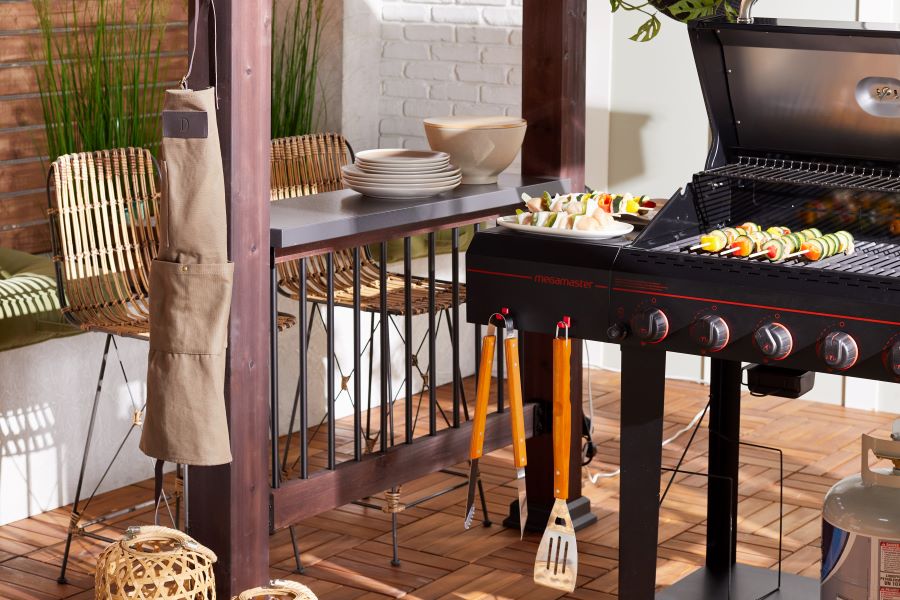
First off, let's start with an important definition. Grilling is cooking food over direct, high heat (typically 400–550°F) for quick results. Barbecue/smoking is slow cooking food over indirect, low heat (usually 225–275°F) to tenderize and infuse smoky flavor.
Are you grilling (aka, having a cookout) or are you having barbecue? If you're wondering what the difference is, grilling is when you cook food like hamburgers, hotdogs, veggies, or steaks on a grate over direct heat. Barbecue is when you slow cook your food over indirect heat, and usually involves a rub or a sauce. In many parts, the two words are used interchangeably. However, there are certain areas of the country where if you say barbecue and you are only grilling burgers and hotdogs…you're going to lose some friends. Especially if you're in the South.
But this argument of terms isn't just culinary philosophy. It will also help you determine what kind of grill (or grill alternative) will serve you best. Whether you want to cook up the perfect, mouthwatering burger, or you crave the slow-cooked perfection of a well-seasoned brisket, you need the right kind of tools to get the job done.

There are three main types of grills: Charcoal, gas, and electric. Each grill offers a specific benefit and flavor profile, so be sure to choose the one that makes the most sense for your space and needs.
| Feature | Charcoal Grill | Gas Grill | Electric Grill |
|---|---|---|---|
| Heat-Up Time | 15–30 minutes | 10–15 minutes | 10–15 minutes |
| Temperature Range | 225–700°F | 250–500°F | 200–500°F |
| Temperature Control | Manual, requires monitoring | Easy, adjustable knobs | Easy, digital controls |
| Flavor Profile | Strong smoky flavor | Mild char, minimal smoke | No smoke flavor |
| Ease of Cleaning | Difficult (ash removal) | Moderate | Easy |
| Price Range | $30–$300 (budget-friendly) | $150–$2,000+ | $100–$500 |
| Ideal Use | Flavor enthusiasts, large cookouts | Everyday grilling, beginners | Apartments, small spaces |
Charcoal grills are the traditional choice when it comes to outdoor cooking. Large charcoal grills are perfect for huge backyard cookouts, while small, portable charcoal grills are great for cooking in the wild while camping or at the beach (in safely designated areas). Charcoal grills come in a wide variety of price ranges and sizes, but they are usually the most economical.
Charcoal grills can be heated with charcoal briquettes, lump charcoal, or even wood, which can be a more cost-effective option than gas-powered grill competitors. This heating method also offers that smoky taste and flavorful char that takes your meat and veggies to the next level.
Pros:
Cons:
However, the affordability and outstanding flavor make charcoal grills a natural choice for many backyard grill masters.
Gas grills are a great way to bring low maintenance flexibility to your cookout. Gas grills are available in both natural and propane gas models. These grills often include extra features such as storage and work areas not available in charcoal models.
Pros:
Cons:
Gas grills are easy to use as they start and heat up quickly. They also make it easy to choose and maintain a consistent cooking temperature, so you don't have to keep your eyes peeled for unruly bursts of heat. A gas grill will not give the smoky flavor you would get with a charcoal grill but will still provide grill marks and a beautiful char. Gas grills provide more efficient heat and produce less personal pollution than charcoal grills (remember, no smoke).
The lack of smoke and ash makes gas grills easier to clean. But the easy-to-use and easy-to-clean features make gas grills a great choice for backyard cooking.
Electric grills are probably the most controversial of the grill types because they cook without smoke and have no open flame, which means the meat tastes slightly different. However, electric grills have come a long way in recent years and come with a variety of benefits to consider.
Pros:
Cons:
First and foremost is that you only need to plug it in to cook your food. There's no need to buy or store extra fuel sources like gas and charcoal.
Electric grills also add an extra measure of safety as the lack of open flame reduces the risk of a fire getting out of control, making this a great option for apartment areas. Most electric grills also get hot enough to allow you to sear your meats to lock in the juice and flavor.
Electric grills are limited by their cords, so if your back yard doesn't have an outlet, you're out of luck. And, once again, they are totally deficient in that delicious smokiness that provides additional complexity and flavor to your meat.
However, electric grills are easy to use, heat up quickly, and are easy to clean. That combined with their inherent safety makes electric grills a great choice for those who want something simple while still cooking outdoors.

Smokers are designed to slowly cook larger cuts of meat and are exactly what you need if you are interested in cooking barbecue. Rather than being placed directly over the heat source, smoked meats are cooked with indirect heat and surrounded by smoke to infuse them with delicious flavor. The low and slow temperatures (typically 225–275°F) cook and tenderize your meats by melting the collagen that makes meat tough, activating enzymes that provide tenderness.
Just like grills, smokers come with a variety of features and heat sources. Smoker types get a little more complicated as construction plays as much a part in how smokers cook as the heat source does.
| Feature | Offset Smoker | Reverse Flow Smoker | Vertical Smoker |
|---|---|---|---|
| Heat Distribution | Uneven, prone to hotspots | More consistent | Very even |
| Capacity | Large cuts, high volume | Large cuts, high volume | Smaller cuts, multiple racks |
| Difficulty Level | Advanced | Intermediate | Beginner-friendly |
| Footprint | Large, horizontal | Large, horizontal | Compact, vertical |
| Price Range | $200–$1,000 | $300–$1,500 | $150–$800 |
| Best For | Experienced pitmasters | Serious hobbyists | Beginners, small spaces |
Offset smokers usually have a horizontal configuration with a wide cooking area to prepare large portions of meat. A firebox off to the side of the smoker burns the wood or charcoal, and the smoke is then funneled into an open cooking chamber where it swirls around, heating your food before it is released through a smokestack. A pan of water in the smoker keeps your meats moist and helps to regulate temperature.
Pros:
Cons:
Offset smokers can also come in vertical designs. These work in a similar way to horizontal smokers, but they are better at distributing heat and take up less space in your yard. However, the smaller size means you can't prepare as much meat, and they tend to be more expensive than traditional offset smokers.
Reverse flow smokers are a variation of the offset smoker. Reverse flows smokers have a heating box that is placed a little lower than on a traditional offset, and the smokestack is also placed on the same side as the firebox instead of opposite to it. This positioning and the internal baffle box work to direct the smoke so it flows first underneath your cooking surface and then back over the top, providing you with a consistent, more controlled cooking temperature.
Pros:
Cons:
Vertical smokers feature an upright cooking chamber with the heat source at the bottom, a water plate above, and a number of cooking racks on top. The clever design traps and circulates the heat and smoke to create a consistent, even cooking temperature. The compact profile and efficient heat distribution means that vertical smokers need less fuel and are easier to use than other smoker varieties.
Pros:
Cons:
You still get tender, flavorful, fall-off-the-bone barbecue.
Deciding between a grill and a smoker depends on what and how you like to cook:
Choose a grill if you:
Choose a smoker if you:
Consider a combo (Kamado or pellet grill) if you:
Though the experienced pitmaster can grill on an offset smoker or smoke on a charcoal grill, it takes practice. Most find it easier to have separate tools for separate jobs. However, you don't always have to choose between a smoker and a grill.
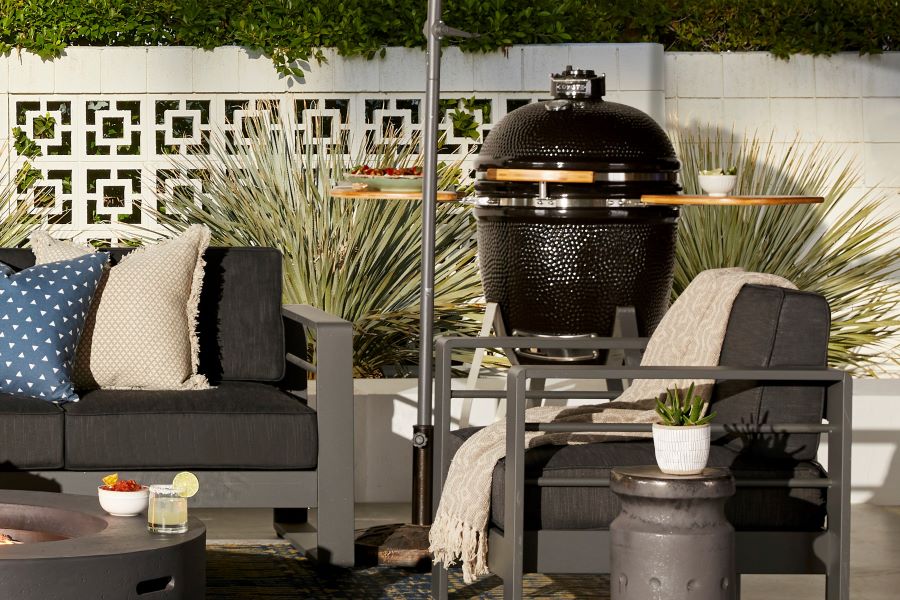
Some devices work as grills, smokers, and outdoor ovens, allowing you to fix burgers, brats, and hotdogs as well as your briskets, ribs, and barbecue. The ease and simplicity of a combination may be exactly what you're looking for.
Ceramic grills, most commonly known as Kamado grills, are a great option for versatile cooking. These egg-shaped grills feature a ceramic lining that is fantastic at heat retention so you can cook while using less fuel, meaning you don't need to keep a super close eye on them. Ceramic grills are able to reach the high temperatures (up to 700°F) needed for searing meats, but they are also capable of regular grilling, low and slow cooking, and even baking (with the proper attachments).
Kamado grills come in a variety of sizes and feature a grate (or several grates) over a heat box, and the temperature is maintained and altered through the use of air vents. Ceramic grills are heated with lump charcoal, but that fuel source can sometimes be mixed with wood to create more diverse and intense flavors, which is great when you're smoking your meats. Accessories like pizza stones, heat reflectors, or rotisseries allow you to use this grill to cook most types of food.
Pros:
Cons:
Pellet grills are just as versatile as the Kamado grills, and in many ways are like an outdoor convection oven. You can smoke meats, grill, or even bake on a pellet grill. Designed to infuse your food with flavor, pellet grills feature a hopper that you pre-load with wood pellets which are fed automatically into a firepot by an auger. Fans circulate the hot smoke evenly throughout the grill for a consistent cooking temperature.
Pros:
Cons:
The versatility and the low monitoring cooking make a pellet grill a great choice for those who love to cook outdoors.
What is the best grill for apartments? Electric grills are the best choice for apartments. They produce no smoke or open flame, making them safe for balconies and compliant with most building regulations.
Which grill type is easiest to clean? Electric grills and pellet grills are the easiest to clean. Electric grills have no ash, while pellet grills typically include collection buckets for grease and ash. Gas grills are moderately easy to clean, while charcoal grills require the most cleanup due to ash removal.
Can I smoke meat on a regular grill? Yes, you can smoke on a charcoal grill using indirect heat. Place coals on one side, add wood chips, and cook your meat on the opposite side with the lid closed. However, dedicated smokers provide better temperature control and more consistent results for long cooks.
What's the difference between a grill and a smoker? Grills cook food quickly over direct, high heat (400–550°F), while smokers cook food slowly over indirect, low heat (225–275°F). Grills are best for burgers, steaks, and vegetables; smokers are designed for brisket, ribs, and other large cuts that benefit from long cooking times.
Are pellet grills worth the investment? Pellet grills are worth it if you want versatility and convenience. They can grill, smoke, and bake with minimal monitoring. However, if you prioritize intense smoky flavor above all else, a traditional charcoal grill or offset smoker may be a better choice.
Now that you know what kind of grill or smoker you want, check out our patio furniture so you can easily entertain outdoors.