The Container StoreStorage for every budget, style, and space
Bed Bath & BeyondDesigner brands & home goods at the lowest prices online
Kirkland’sHome decor and uniquely distinctive gifts

A patio umbrella is an outdoor shade structure designed to protect you and your family from harmful UV rays, reduce glare, and provide relief from summer heat. Read this guide to find the best umbrella for your space.
Key Factors When Choosing a Patio Umbrella:

Break out the tape measure and find out exactly how much space you need to shade. When you're throwing shade on a lounge or play area, choose an umbrella that covers as much of the space as possible. Remember, a larger umbrella means more space for the kids to play while they're still protected from the sun. Your umbrella should be 7 to 9 feet tall, no matter which type of area you're shading.
For patio tables, choose an umbrella 2 feet larger in diameter than your table. This extra shade provides a fuller glare-free experience depending on where the sun is in the sky. The shape of your umbrella should match the shape of your table for a cohesive look. If you can't find an umbrella that matches your table, you might want to buy a patio umbrella table instead. Refer to the chart below for exact measurements.
|
|
|
|
|
|
|
|
|---|---|---|---|---|---|---|---|
| Patio Table Size (Diameter/Length in Feet) | 2 Feet or Less | 3 Feet | 4 Feet | 5 Feet | 6 Feet | 7 Feet | 8 Feet |
| Umbrella Size (Diameter/Length in Feet) | 6 Feet | 7 Feet | 8 Feet | 9 Feet | 10 Feet | 11 Feet | 12 Feet |
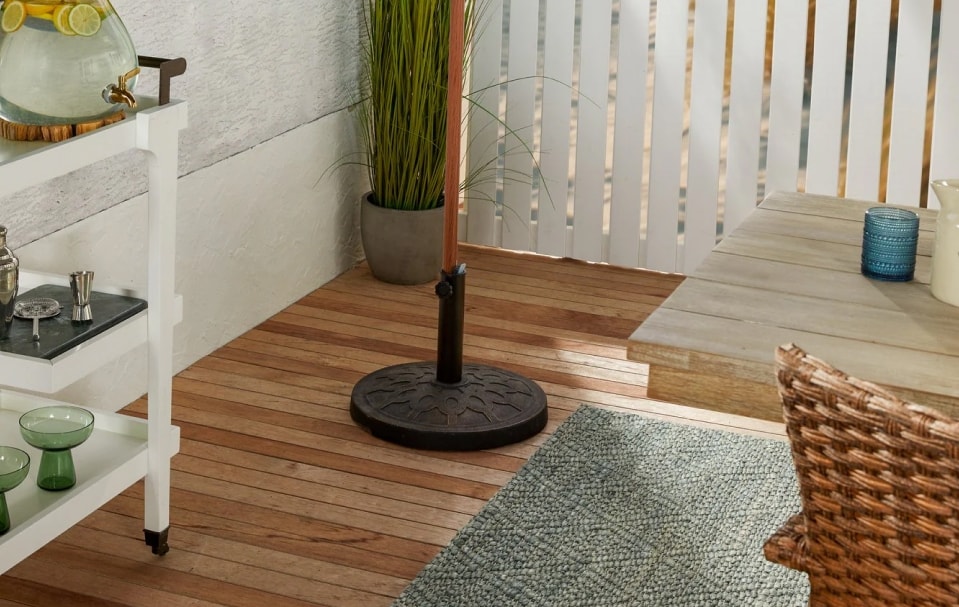
Before you complete your purchase, add an umbrella base to your order. You don't want the excitement of getting your umbrella in the mail to be overshadowed by disappointment when you can't use it until you order the base. Free standing umbrellas need heavier bases than their table counterparts since they don't have the extra support of a table.
Free-standing umbrellas require a minimum 50-pound base; add 10 pounds per additional foot of umbrella diameter.
Refer to the chart below to make sure your base is heavy enough to keep your umbrella standing tall. Reserve anything lighter than 50 pounds for your table umbrellas.
|
|
|
|
|
|
|
|---|---|---|---|---|---|---|
| Free-Standing Umbrella Size (Diameter/Length in Feet) | 5 Feet or Less | 6 Feet | 7 Feet | 8 Feet | 9 Feet | 10 Feet + |
| Minimum Base Weight (In Pounds) | 50 lbs or Less | 60 lbs | 70 lbs | 80 lbs | 90 lbs | 100 lbs |

Typical outdoor sun umbrellas made of plastic or lightweight fabrics are not waterproof, so they may not hold up well in heavy rain. Just like your umbrella frame, your shade's fabric needs to be durable enough to survive in unpredictable weather. That means anything that is susceptible to fading, mold, or holes is out of the question.
For a patio umbrella that won't fade in the sun, you'll want one made from canvas or vinyl. To save money, go with a polyester umbrella. It's almost as durable as Sunbrella and is similarly resistant to fading, mold, and holes or tears.

Patio umbrellas are made survive in all kinds of weather. While you should always try to close your umbrella when the wind picks up, sometimes you might forget. Or maybe it's raining and you don't feel like going outside. If you live in an especially windy area, or you have a tendency to forget to close your umbrella, you need one with a strong frame.
Look for an umbrella style that works in your climate. There are durable sun umbrellas made to withstand high winds; these umbrellas often have fiberglass ribs to protect the frame from bending. Fiberglass ribs typically withstand winds up to 25–35 mph before flexing, making them ideal for breezy locations.
An aluminum frame is your best bet for standing up to storms and other bad weather. Plus, aluminum resists corrosion, so it will look just as great in a few years as it does the day you buy it. Choose a steel frame if you're on a budget but you still need something strong and sturdy. It might not stay as pretty as an aluminum option, but it will still endure the wind and the rain.

Lunching poolside with friends, lounging away the afternoon in an outdoor chaise, or playing in the sandbox with your little ones — no matter what your patio activities include, there is an umbrella to meet your needs.
A market umbrella features a center pole and is designed for use with patio tables that have umbrella holes, while a cantilever (offset) umbrella has a side-mounted pole that provides unobstructed shade without a center support.
Choose a standard market umbrella to accompany your outdoor dining table. Market umbrellas also work for open seating or play areas but with a center pole you run the risk of blocking your view. A cantilever, or offset umbrella is a better choice for open spaces. The pole is off to the side making the area obstacle free. Offset umbrellas are particularly useful for shading benches and chairs that don't belong to a matching patio table. You can also buy several offset umbrellas to create an expansive canopy for special events, such as weddings or other outdoor celebrations.

You don't have to close your patio umbrella the moment the sun sets. When your umbrella includes lights, you can easily transition an evening dinner into a nighttime dessert. You can take advantage of a particularly sunny climate and buy a solar patio umbrella that absorbs the sun's rays during the day and then lights your patio at night. When you choose a pre-lit umbrella that is solar powered, you don't have to worry about cords and power outlets. If your umbrella choice doesn't have lights, just add your own.
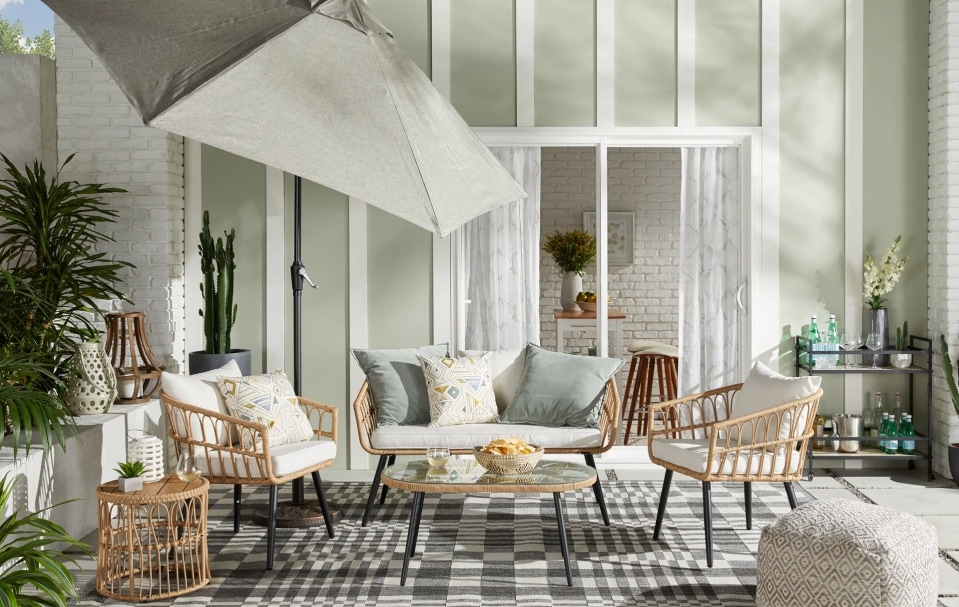
Although outdoor umbrellas are designed to withstand outdoor conditions, they do get dirty from time to time. Choose a cleanable umbrella now and save yourself a scrubbing-induced headache in the future.
Umbrellas made with Olefin or Coolaroo fabrics are easy to wipe clean. Plus, they resist mold and stains so you don't have to clean them on a regular basis. In fact, you can clean them once a year when you put them away for the season and they'll be good to go.
What size patio umbrella do I need? For patio tables, choose an umbrella that is 2 feet larger in diameter than your table. For example, a 4-foot table needs a 6-foot umbrella. For lounge or play areas, select an umbrella that covers as much of the space as possible, with a height of 7 to 9 feet.
What is the best material for a patio umbrella? Sunbrella fabric is considered the best overall material due to its superior UV protection, water resistance, and fade resistance. For a budget-friendly alternative, polyester offers similar durability at a lower cost.
What is the difference between a market umbrella and a cantilever umbrella? A market umbrella has a center pole and is designed for patio tables with umbrella holes. A cantilever (offset) umbrella has a side-mounted pole, providing unobstructed shade ideal for open seating areas, poolside lounging, or spaces without tables.